
The Safe and Durable Property: How to Build a Short-Term Rental That Rarely Needs a Claim
The cheapest claim is the one you never file.
Without prevention, every other layer spends its life paying for incidents that never had to happen.
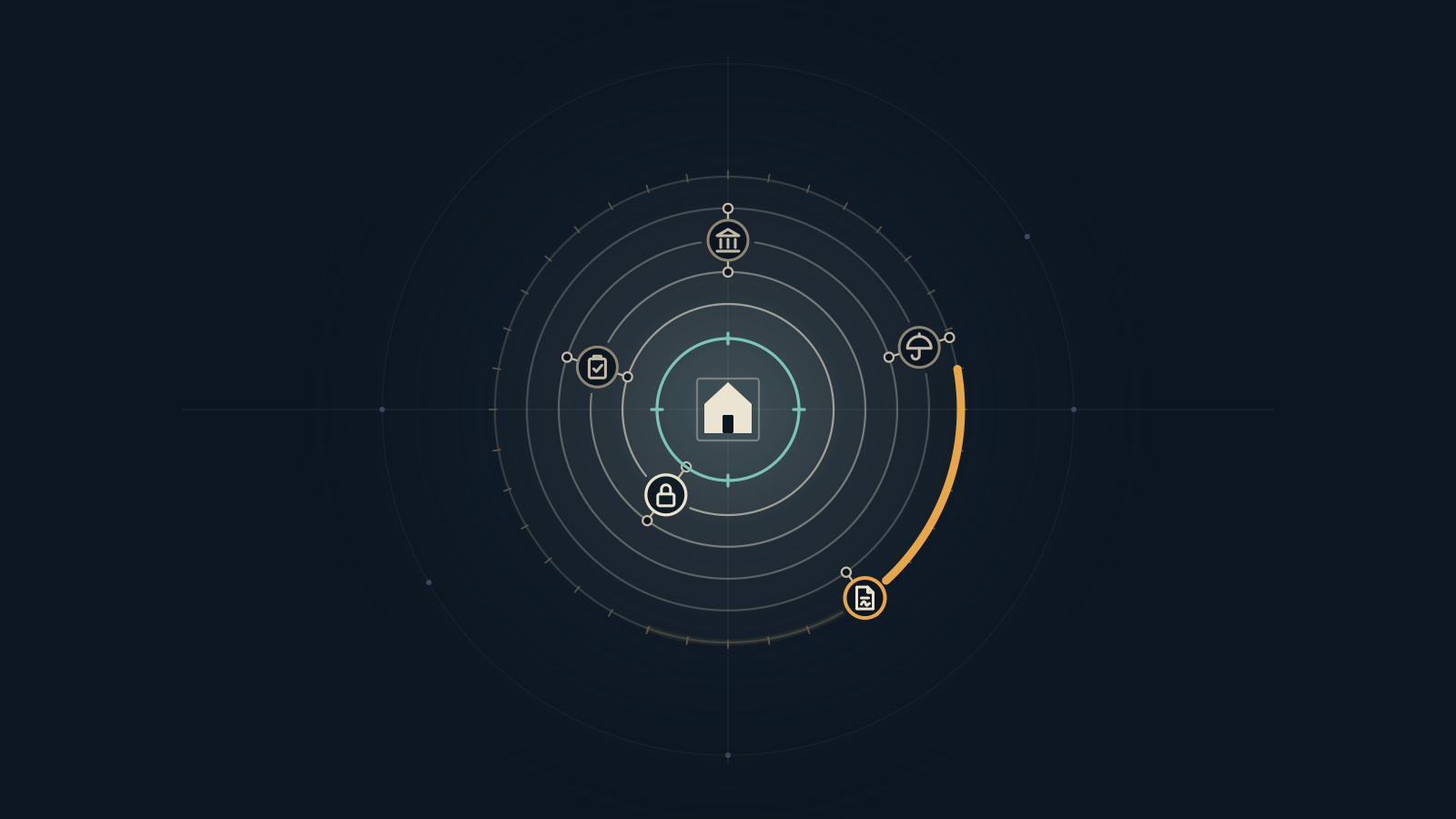
Operator knowledge · Owner Protection Stack
Protection is not one purchase — it is five layers, and each one assumes the other four exist. Prevent the avoidable, control what you cannot, understand who can change your permitted use, backstop the rest with insurance, and keep the written evidence a claim will demand.
Everything on this page changes — policies renew, boards vote, platforms rewrite terms. The property record is what stays fixed underneath.
One incident can touch three layers at once.
A guest is hurt at the hot tub on a direct booking. The platform’s host protection does not apply — it was never that channel’s stay. The homeowner policy excludes business use, so the backstop has a hole. And with no pre-stay photos or written confirmation, the evidence layer is empty too.
That is one incident touching three layers. Remove any layer and the others carry a weight they were never meant to.
Layer 1
The layer that stops avoidable claims and operating failures before they start: a safe, durable property, controlled access, and quiet nights.
The cheapest claim is the one you never file.
Without prevention, every other layer spends its life paying for incidents that never had to happen.
A smart lock is a small access-control system—not a shopping decision. Map guest codes, cleaner access, connectivity, and your failure plan before you buy hardware.
Without controlled access, you cannot say who was in the property, or when.
A smart lock can be a good purchase. An access system can be a good operation. Choose consumer hardware, STR platforms, PMS integration, or shared-building access based on how you actually book and operate.
Without the right access system, a convenience gadget becomes a security and hand-off gap.
One bad party can damage a property, anger neighbors, and create platform or insurance headaches. But the answer is not creepy surveillance. STR owners need a privacy-safe prevention stack: clear rules, smart access, noise and occupancy signals, guest messaging, and a real escalation plan.
Without noise and party prevention, one stay can cost you the neighbors, the permit, and the booking channel.
Layer 2
When prevention does not hold, this layer decides whether a broken item is a quick recovery or a major claim.
A deposit is not protection. It's a recovery tool you have to set up, document, and enforce.
Without this layer, every stained rug becomes an insurance decision.
Layer 3
The layer that decides whether the other four are even allowed to operate. A city can permit a rental that an HOA or condo association forbids.
A city's permission is public and searchable. Your HOA's — or your condo association's — prohibition may be neither.
Without this, you can insure and equip a rental the recorded documents never permitted.
Eight things to confirm before you buy a short-term rental inside an HOA or condominium — and one that decides all the others: who can change the rule after you close.
Without the review, “grandfathered” is a hope, not a documented right.
Layer 4
Insurance is the backstop for the rare, serious loss — not a substitute for the layers above it.
One policy rarely protects a short-term rental end to end — five different layers do. A claim is the worst time to learn which layer was supposed to respond.
Without the right policy, a platform benefit you assumed was coverage leaves a direct booking uninsured.
Policies, damage waivers, and platform protections are three different things sold as one word. Comparing them starts with knowing which is which.
Without knowing policy from waiver from platform, you can pay for “protection” that never covered the peril.
Layer 5
Coverage you cannot prove is coverage you may not have. This layer keeps the written record a claim will demand.
Insurance is decided in conversations and lost in memory. Six fillable pages that turn what you confirmed into something you can point to next year.
Without written evidence, “the agent said it was covered” is what you are left holding at claim time.
ASTRO records what protects your property; it never decides it. No policy, product, or provider is required for membership, verification, the registry, or the Owners Exchange. ASTRO is the identity, trust, and educational layer — the coverage, controls, and providers are yours to choose.
The worst time to learn which layer was supposed to respond is after the claim.