
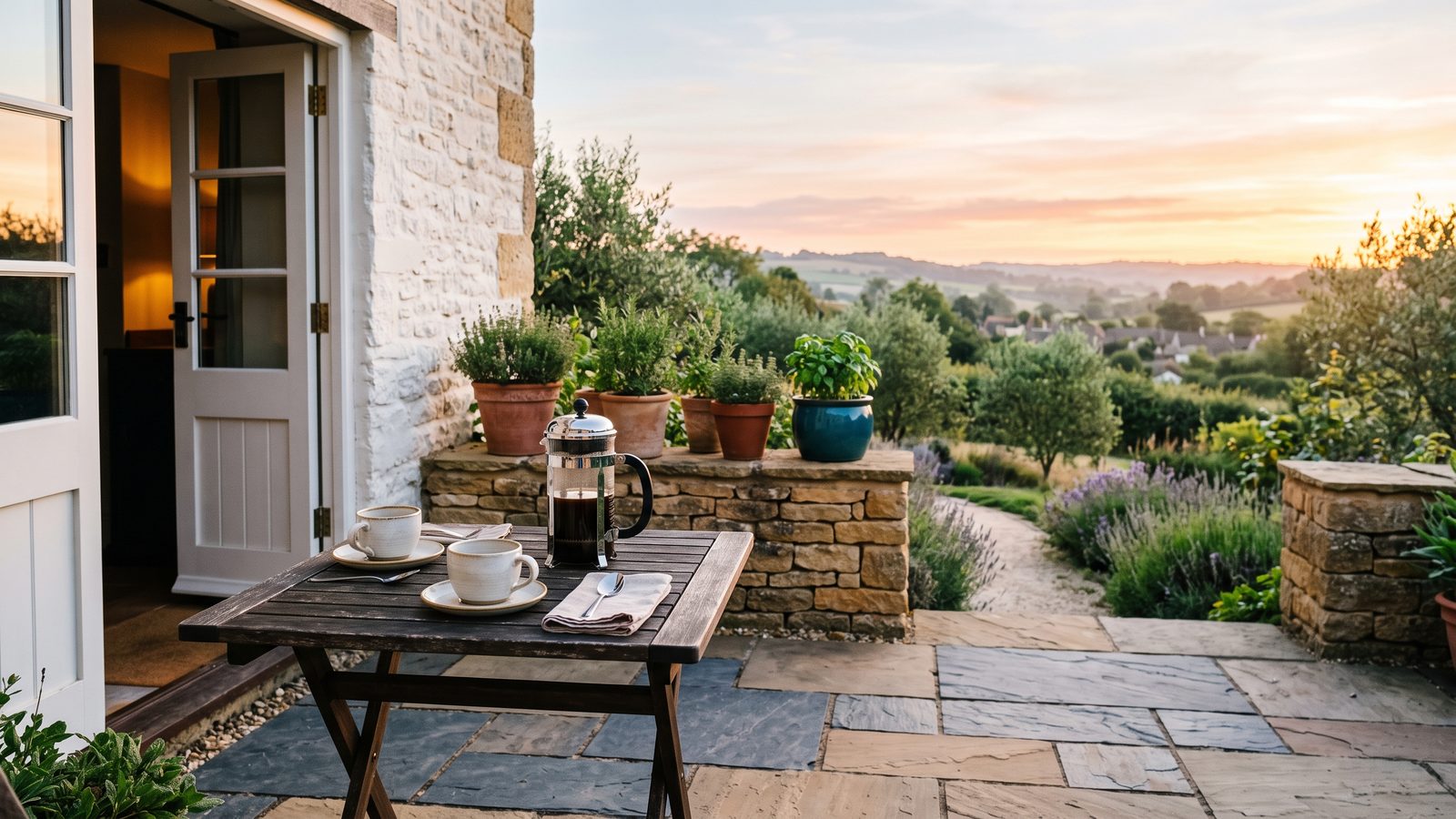
Your Airbnb Cover Photo Is Not a Room Shot. It’s a Click Decision.
Most Airbnb hosts do not lose the click because their property is bad. They lose the click because the first photo gives the guest no reason to stop.
It is a point listing coaches make often, and it holds up: the cover photo is the most important image in a listing, because it decides whether the guest clicks or scrolls past. And too many hosts lead with a wide shot of an empty living room.
The problem is not that living rooms are unimportant. The problem is that most living-room cover photos do not say anything. They show a couch, a rug, a coffee table, maybe a television, maybe a window. They technically document the property, but they do not create desire. And in a crowded search result, documentation is not enough.
A cover photo has one job:
Make the right guest pause long enough to imagine the stay.
That is a different job than showing the largest room. It is a different job than proving the layout. It is a different job than “getting everything in the frame.” A good cover photo is not a record of the property. It is the opening promise.
The guest is not shopping for a couch
The default host instinct is understandable. Owners know how much time and money went into the renovation. They remember buying the sectional, choosing the rug, hanging the television, replacing the floors, painting the walls, and staging the room. So when it is time to choose the cover photo, they often choose the image that says, “Look how much space this place has.”
But guests are not scrolling Airbnb thinking, “I need to compare empty living rooms.” They are thinking:
- Could I see myself here?
- Is this place worth opening?
- Does it feel clean, comfortable, and specific?
- Is there something here I cannot get from the next listing?
- Does this property match the trip I am imagining?
A wide living-room shot can answer those questions, but most do not. Most wide shots answer a much weaker question:
Does this property contain furniture?
That is not enough.
What makes a cover photo work
A strong cover photo usually does at least one of three things.
First, it creates desire. It makes the guest want the moment shown in the image. Morning coffee on the balcony. Kids in and out of the pool. A fire pit at dusk. A porch swing facing the trees. A bright kitchen that looks like the center of a family weekend.
Second, it creates specificity. It shows why this property is not interchangeable with every other two-bedroom, three-bedroom, or beach-adjacent listing in the market. The photo should answer: what is memorable here?
Third, it creates trust. It looks real, clean, bright, accurate, and maintained. Guests do not need fantasy. They need confidence that the place will feel as good in person as it looks online.
The best cover photos usually combine all three:
desire + specificity + trust.
That is the scroll-stop formula.
The empty-room problem
The classic empty living-room photo fails because it is usually too neutral. Neutral can be safe, but safe rarely wins the click. A room can be clean, spacious, and tastefully staged while still being emotionally dead. The guest sees the image and has no immediate reason to click because the image does not tell a trip story.
This is especially true when the photo is taken from the corner of the room with a wide-angle lens. The host sees “spacious.” The guest sees “generic.” Worse, the guest may see distortion, stretched furniture, or a room that feels colder than it really is.
A wide shot has a place in the photo tour. It helps explain layout. It helps guests understand scale. It reassures them that the common area exists and functions. But “useful later” does not mean “best first.”
The cover photo is not the inspection report. It is the invitation.
Better cover photo candidates
The right cover photo depends on the property, the market, and the guest you want. But here are stronger candidates than the default empty living room:
The outdoor moment
If the property has a great patio, deck, pool, hot tub, fire pit, porch, balcony, dock, or view, that is often the best lead. Outdoor photos work because they communicate the stay, not just the shelter. They say: this is where the trip happens.
A good outdoor cover photo might show:
- a patio table set for coffee;
- string lights over a seating area;
- a pool with towels and clean edges;
- a hot tub with a mountain or wooded backdrop;
- a fire pit with chairs arranged for conversation;
- a screened porch that feels like the best room in the house.
The key is not just “show outside.” The key is to show a usable moment.
The signature amenity
If the property has one feature guests consistently mention, lead with it. That might be a game room, theater seating, sauna, cowboy pool, bunk room, chef’s kitchen, private dock, outdoor shower, mural wall, arcade corner, beach gear station, nursery setup, pet-friendly yard, or walkable downtown setting.
If the amenity is the reason people book, it deserves serious cover-photo consideration.
The arrival feeling
Sometimes the best image is the exterior at the right time of day. A beautiful dusk exterior can say, “You have arrived.” This works especially well for cabins, cottages, beach houses, historic homes, lake houses, farm stays, and properties with strong architecture. The warning: exterior photos only work if the exterior is genuinely attractive and the image makes the property feel inviting. A flat driveway shot is not a cover photo. A warm arrival scene can be.
The hospitality proof shot
Some properties win because they feel cared for. In that case, a strong cover photo may be a composed hospitality image: a breakfast nook, welcome tray, reading corner, coffee bar, stocked game shelf, or clean bedroom scene with warm natural light. This should not become fake luxury. It should be honest proof that the owner thinks about the guest experience.
What not to do
A cover photo should attract attention without creating regret. Do not use a photo of an amenity guests cannot actually use. Do not show a bottle of wine if you do not provide it. Do not show beach chairs if they are not included. Do not show a spotless grill if guests will arrive to a dirty one. Do not use heavy edits that hide flaws the guest will immediately notice. The click matters, but the review matters more. The goal is not to trick people into opening the listing. The goal is to make the right guest recognize the right stay. That is the line.
The first five photos are the real cover system
The cover photo matters most, but it does not work alone. Think of the first five photos as a mini sales sequence. A guest clicks because of the first photo, then immediately checks the next few images to decide whether the promise is real.
Airbnb’s own host guidance points the same way. Photos display in landscape format in search results, Airbnb asks for at least 1024×683 pixels, and the first five photos are the ones it shows on the listing’s cover page, which is why it lets hosts choose and reorder exactly those five.
A strong first-five sequence might look like this:
- The promise — the best scroll-stopping image.
- The proof — the main interior or signature amenity.
- The sleeping confidence — the best bedroom or bunk setup.
- The lifestyle support — kitchen, dining, outdoor living, workspace, or family feature.
- The location/context — view, exterior, neighborhood, beach access, downtown walkability, dock, trail, or guest-relevant setting.
That sequence does more than show rooms. It answers the guest’s silent questions in order:
- Why should I care?
- Is the place real?
- Can we sleep comfortably?
- How will we spend time there?
- Where are we, and what does this trip feel like?
That is how photos sell.
The cover photo test
Before choosing a cover photo, shrink it down. Look at it the way a guest sees it: small, fast, surrounded by competing listings.
Then ask:
- Would I stop scrolling?
- Can I tell what is special in one second?
- Does this photo communicate the stay, not just the room?
- Is the image bright and clean without feeling fake?
- Would the guest feel the same promise when they arrive?
If the answer is no, it is probably not the cover photo. It may still belong in the listing. It may be useful. It may be necessary. It may explain the space well. But the cover photo has a higher standard.
The owner’s real takeaway
The best Airbnb hosts do not think of photos as decoration. They think of photos as conversion infrastructure. Your pricing matters. Your reviews matter. Your amenities matter. Your location matters. Your title and description matter. But none of that gets a chance if the first image fails. The cover photo is the front door of the listing. It determines whether the guest walks in.
So stop asking, “Which photo shows the most room?” Ask:
Which photo makes the right guest want this stay?
That one goes first.